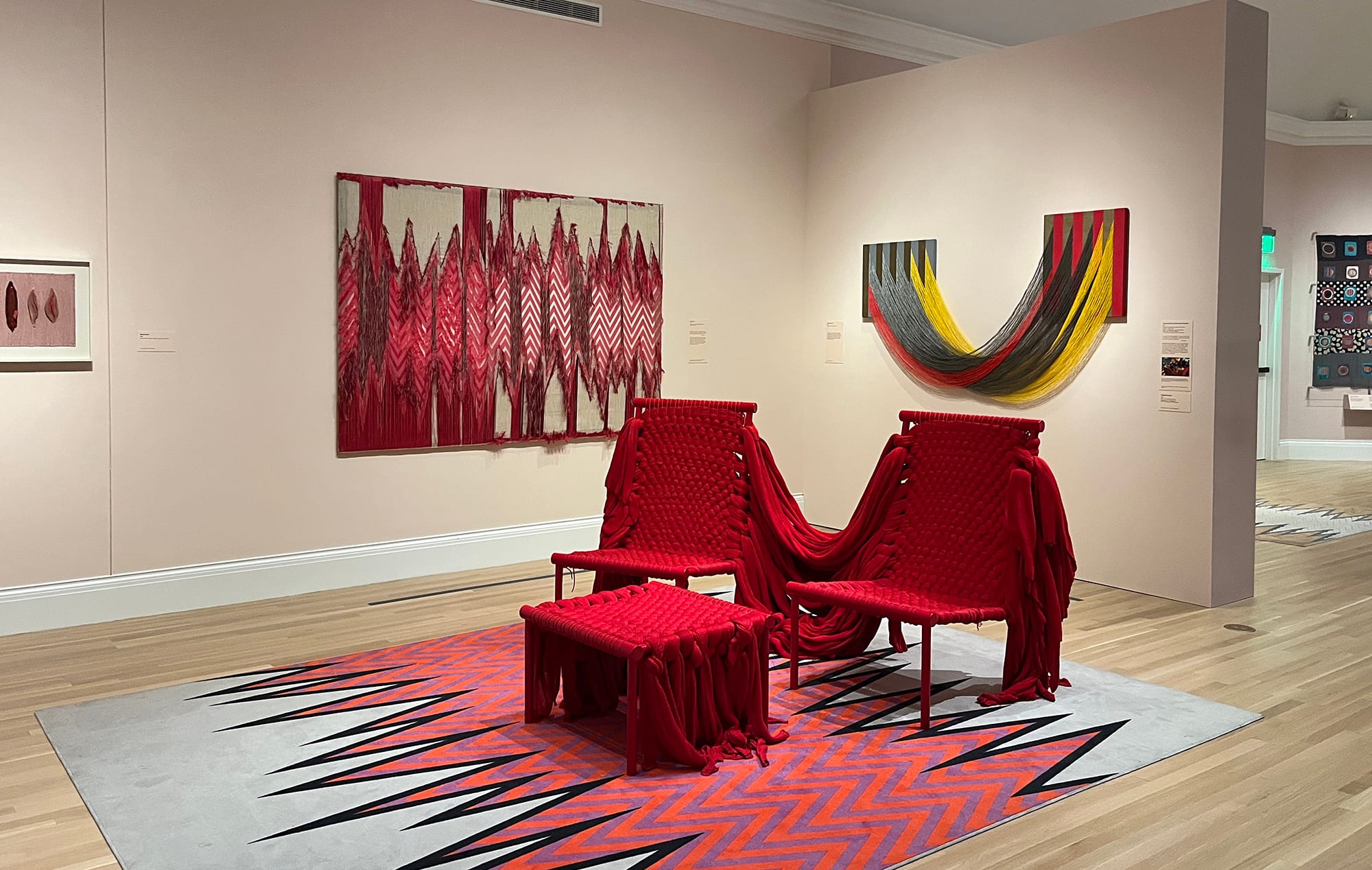

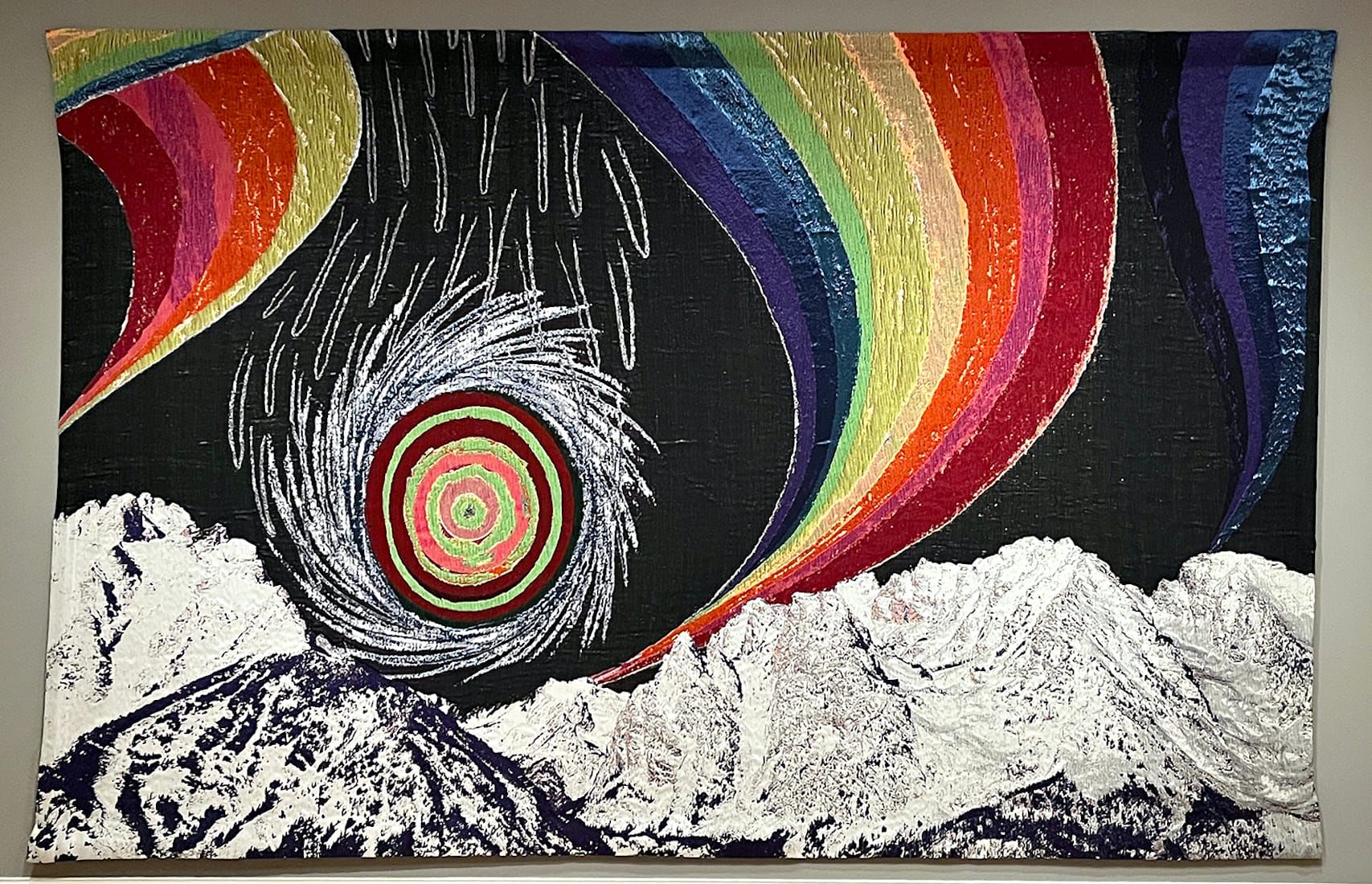
In her textile based practice, she calls attention to what holds a piece together or the ways some works seem ready to come apart.
PROVIDENCE, Rhode Island One of my first encounters with the work of Liz Collins was her installation for the New Museum’s 2017 exhibition Trigger, Gender as a Tool and a Weapon. Filling a narrow, dimly lit room, “Cave of Secrets” (2017) created an immersive environment that encouraged people to stay, engage with the work, and socialize. That installation also asserted no hierarchy across the various media and craft techniques employed in her lush textile based works. That same quality is central to her mid career retrospective, Liz Collins: Motherlode, at the RISD Museum.
Curated by Kate Irvin, Motherlode offers an expansive view of a body of work that refuses to sit still, shifting form over time, yet carrying a consistent voice throughout. The show begins with Collins’s early work in fashion (1999–2004), which saw her namesake knitwear line included in New York’s Fashion Week from its launch with her thesis show. Also featured is her decade-long collaborative performance and installation project, Knitting Nation, as well as design projects, and her textile-centered visual art practice.
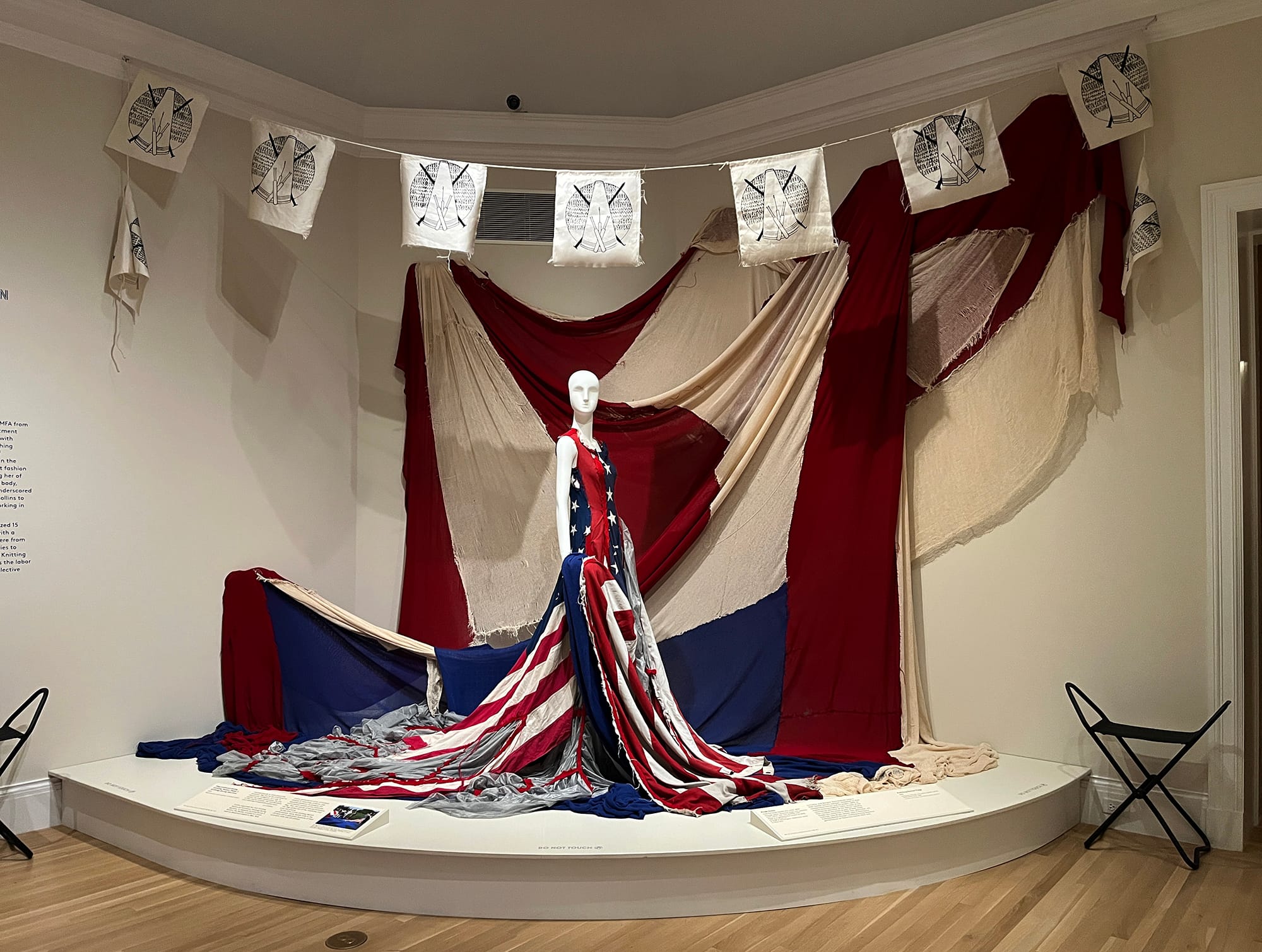
Collins’s thorough knowledge of textiles and their manufacture undergirds much of her production, from the garments she made for her fashion label to the monumental fabric works created more recently. The artist regularly employs scale and color to animate her often abstract compositions, with a consistent focus on the material itself, calling attention to what holds a piece together, as in “Royal Embrace” (2019) and “Head” (2023), or the ways some works seem always to be on the edge of unraveling, as with “Euphoria II” (2016).
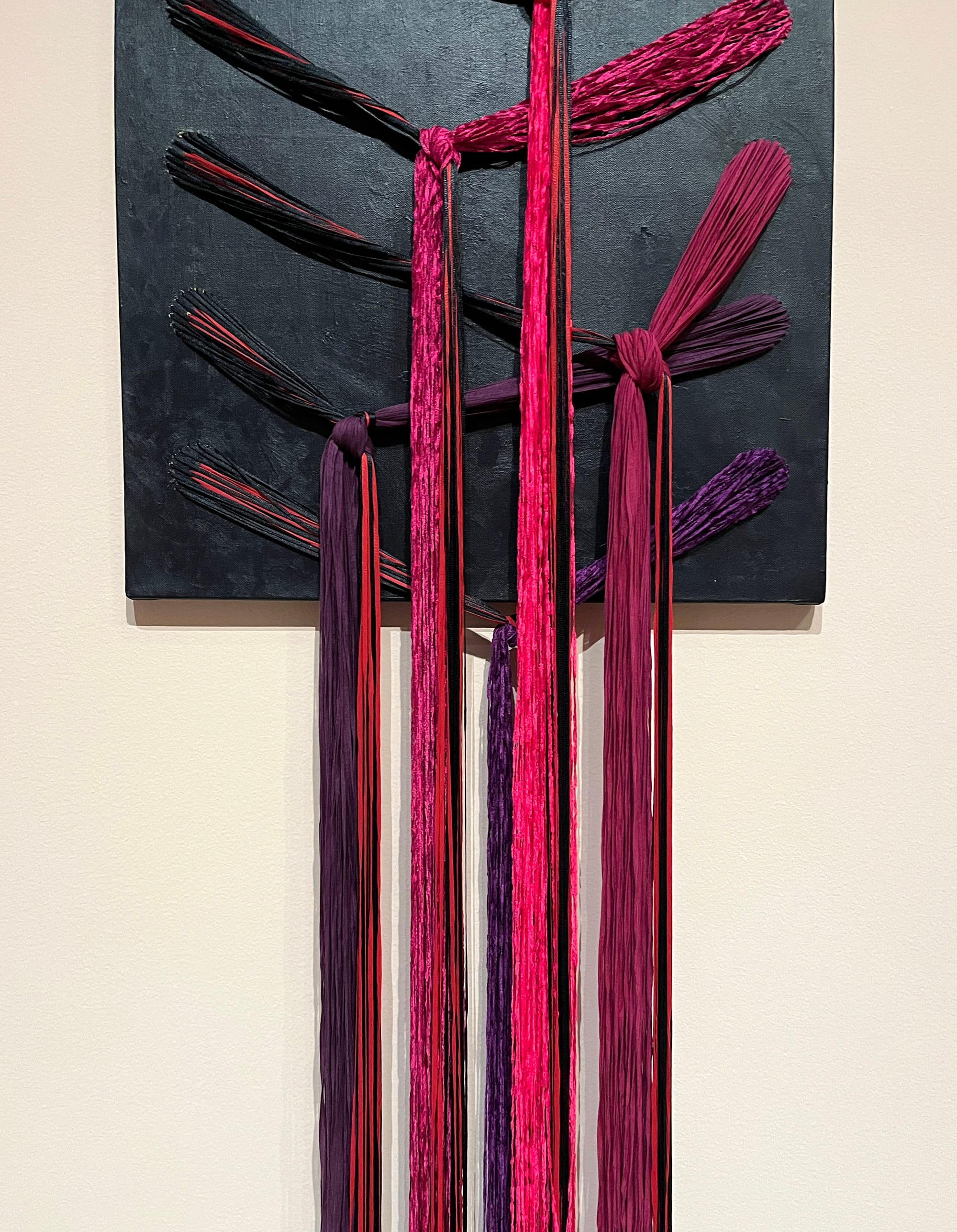
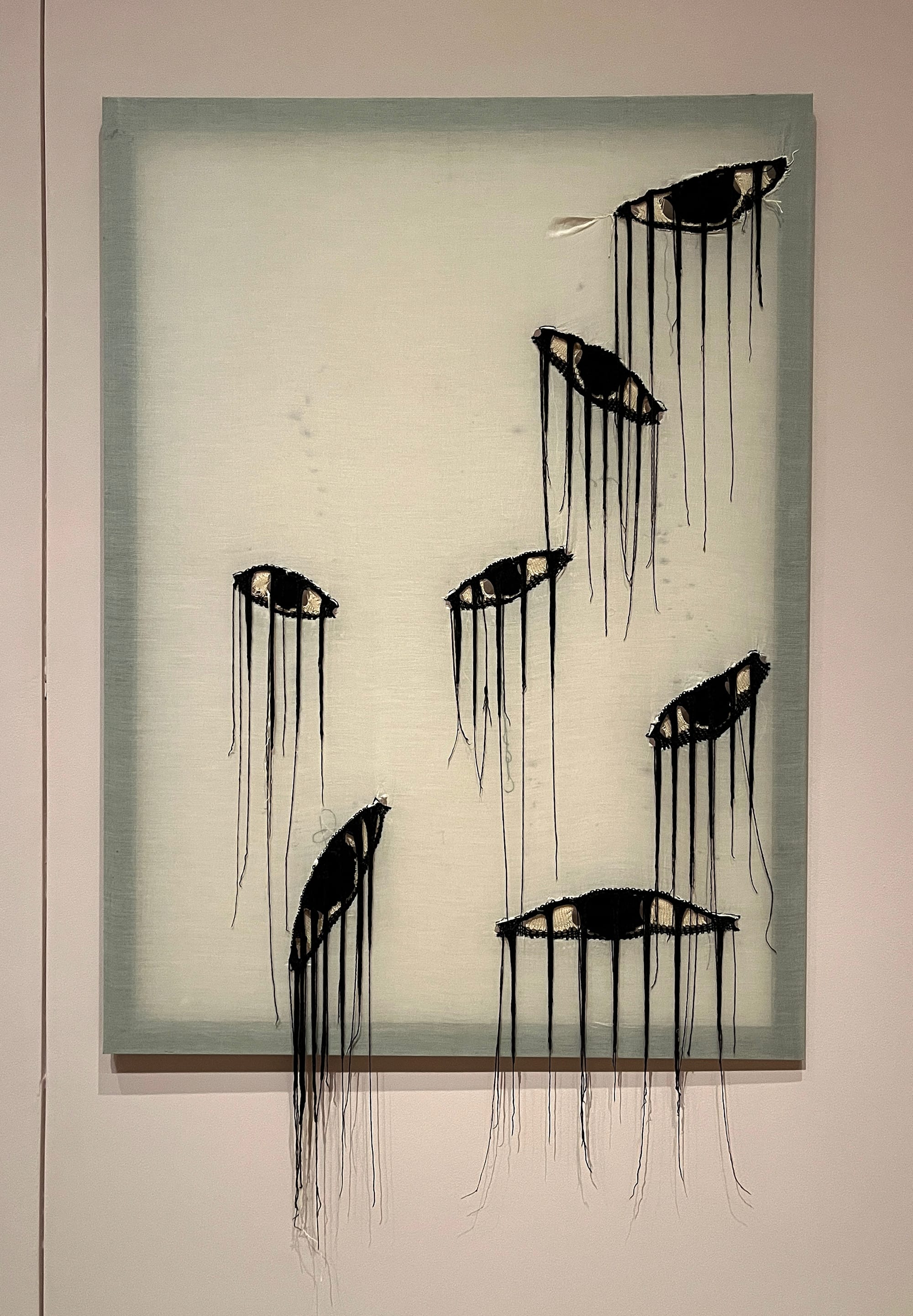
These strategies are also combined in much of the artist’s clothing, her Knitting Nation project, and artworks like “Crying” (2010/2017), in which thickly embroidered eyes puncture a diaphanous silk canvas, leaving wounds in the fabrics. Similar to the ways in which items of clothing are often altered over time, Collins regularly edits her artworks throughout their life. For instance, she hung the the draped installation “Unreachable” (2025) as an inviting horizon in its first presentation as “Promised Land” (2022) at the Touchstones Rochdale museum, whereas now it is presented as a heavy, closed curtain through which we cannot see or enter.
Given the artist’s broad range and the museum’s affiliation with an art school focused on imparting technique, it isn’t entirely surprising that much of the catalog and didactics emphasize process and career trajectory. Yet that choice felt like a missed opportunity, particularly because of Collins’s engagement with abstraction, a mode of expression too often presented ahistorically, not to mention the feminist and queer histories of reclaiming the kinds of craft and material with which she works. We do get a taste of her varied influences, primarily in the catalog, where she mentions her early exposure to weavings from Chiapas and Yucatan in Mexico, as well as Ghanaian Kente cloth, along with artists such as Niki de Saint Phalle, Eva Hesse, and Lee Bontecou, and, more recently, Annie Besant and Charles W. Leadbeater’s book Thought Forms: A Record of Clairvoyant Investigation. But more deliberately contextualizing the work among and responding to cultural and artistic movements would have grounded it in ways that reach beyond the artist’s own production.
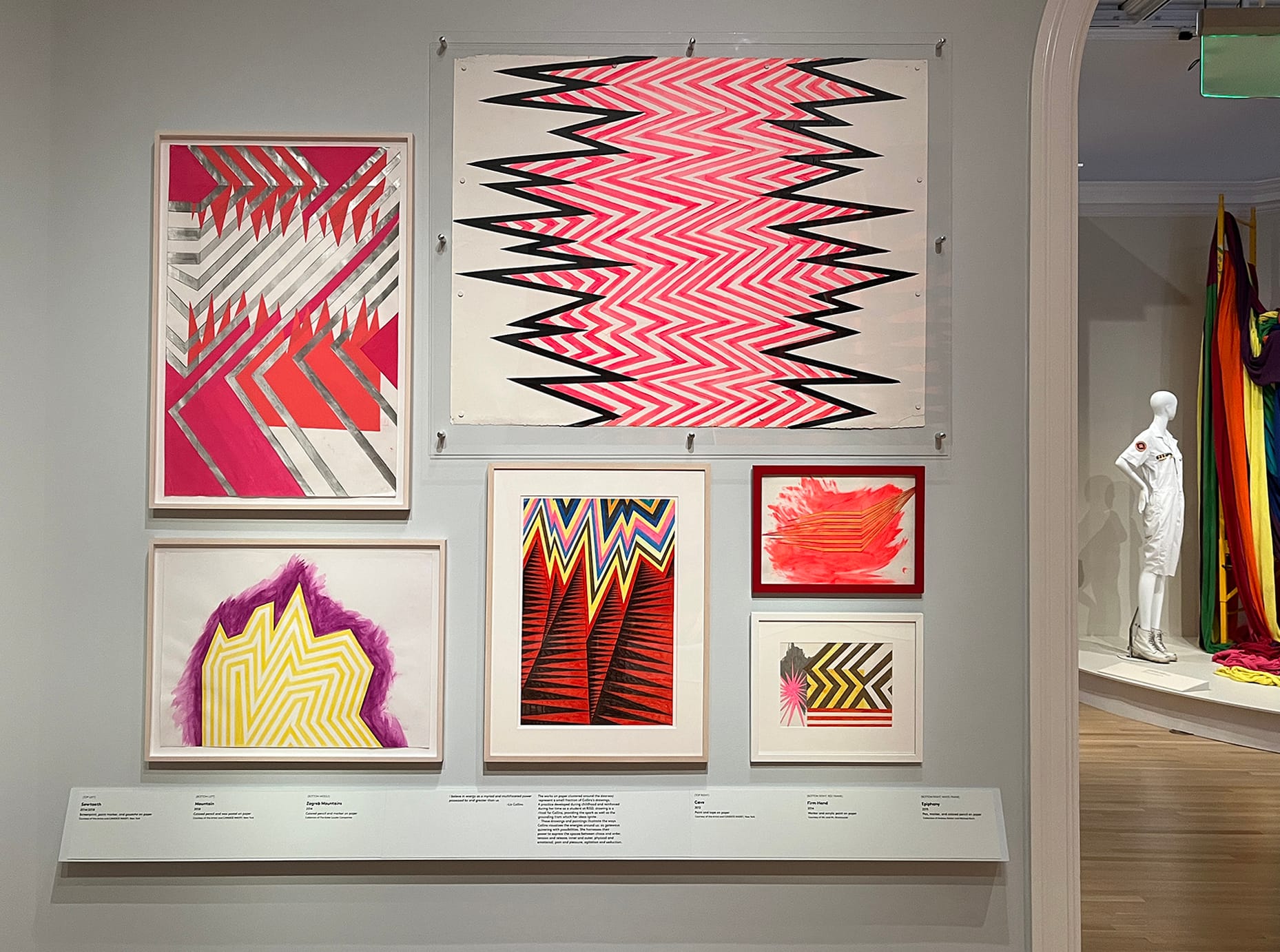
That said, this retrospective which comes on the heels of her inclusion in the 2024 Venice Biennale’s Central Pavilion and the traveling group exhibition Woven Histories: Textiles and Modern Abstraction is a comprehensive survey. For those who can’t get to Providence to see the show, Brooklyn’s Powerhouse Arts is exhibiting a large scale wall-hanging and installation through December 2025. And if you do make it to RISD, make sure to visit the Costumes and Textiles gallery and study center one of the museum’s most exciting collections, offering a taste of some traditions Collins draws from. At a time when interest in textile based work is increasing in the visual arts, with a particular focus on the handmade, Collins’s use of machines and mills to make some of her pieces explodes the intimacy often associated with these works and draws on histories of craftsmanship and production that offer another layer to her work.