
Using an extreme form of chiaroscuro, Wright portrays the dramatic moment of intellectual or moral revelation in his paintings of scientific subjects.
LONDON Joseph Wright of Derby is like the punchline to a “who am I?” riddle: Whose paintings are monumental in scale and scope, have all the drama and chiaroscuro of a Caravaggio, the red infused coloring of Georges de la Tour, a touch of ghoulish Fuseli, strong Dutch Golden Age influence, and yet you’ve never heard of them? Born in 1734, this painter adopted the suffix “of Derby” early in his career, distinguishing himself from London painters. He might as well have added “from the sticks,” for while his famous contemporary Hogarth was busy lampooning society in satirical painted farces, Wright of Derby is excluded from the art historical canon surely due in part to his remoteness, but also precisely to his topical idiosyncrasy, painting obscure nighttime scientific experiments.
The city of Derby was heavily involved with pioneering industrialists of the UK’s Midlands area, associated with the successful pottery pioneer Josiah Wedgwood and the Lunar Society of Birmingham, for example. The region was a melting pot of scientific and philosophical minds. His paintings explore and document the interests and experiments of this movement the period later called the intellectual Enlightenment — as extensions of the scientific discipline.
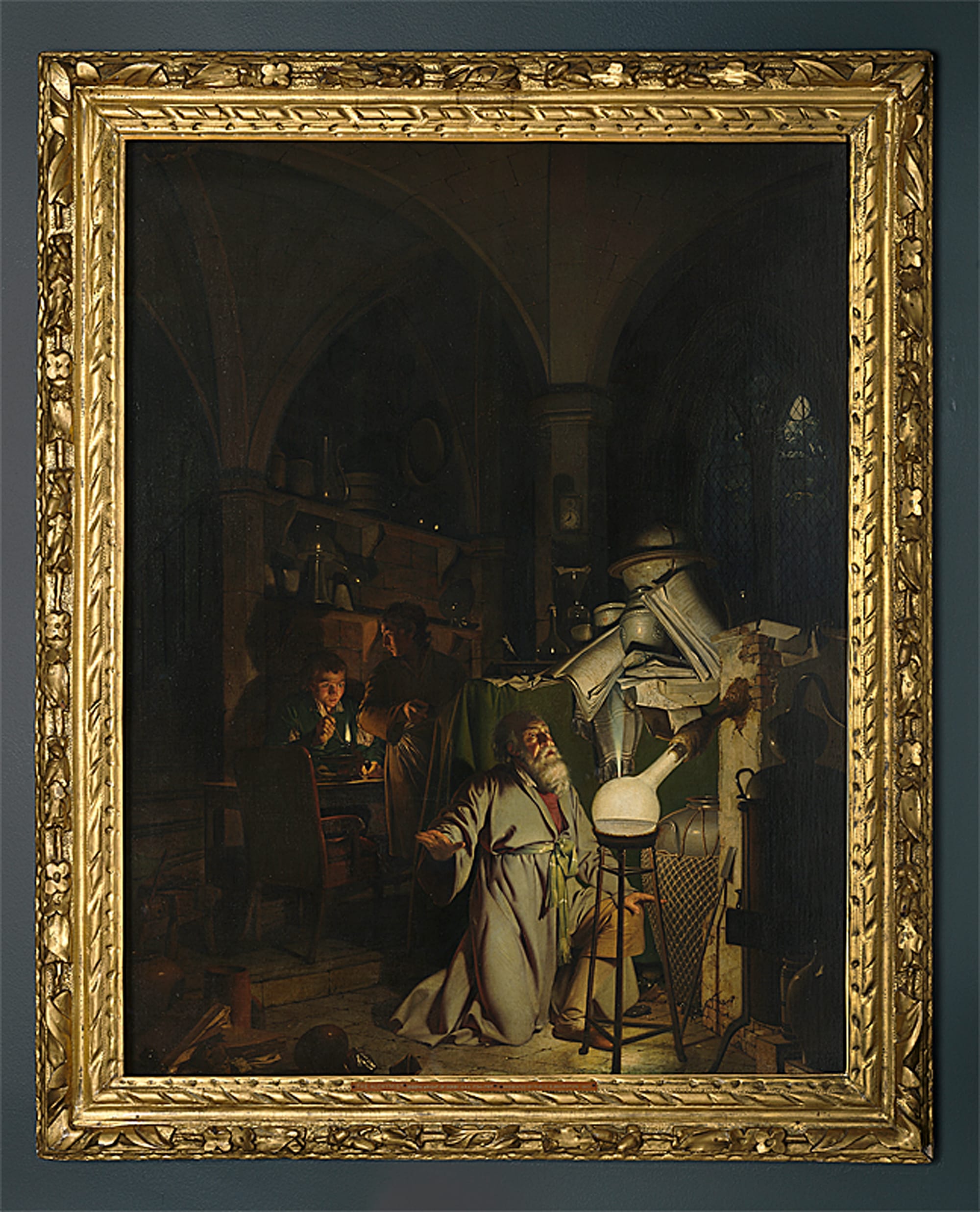
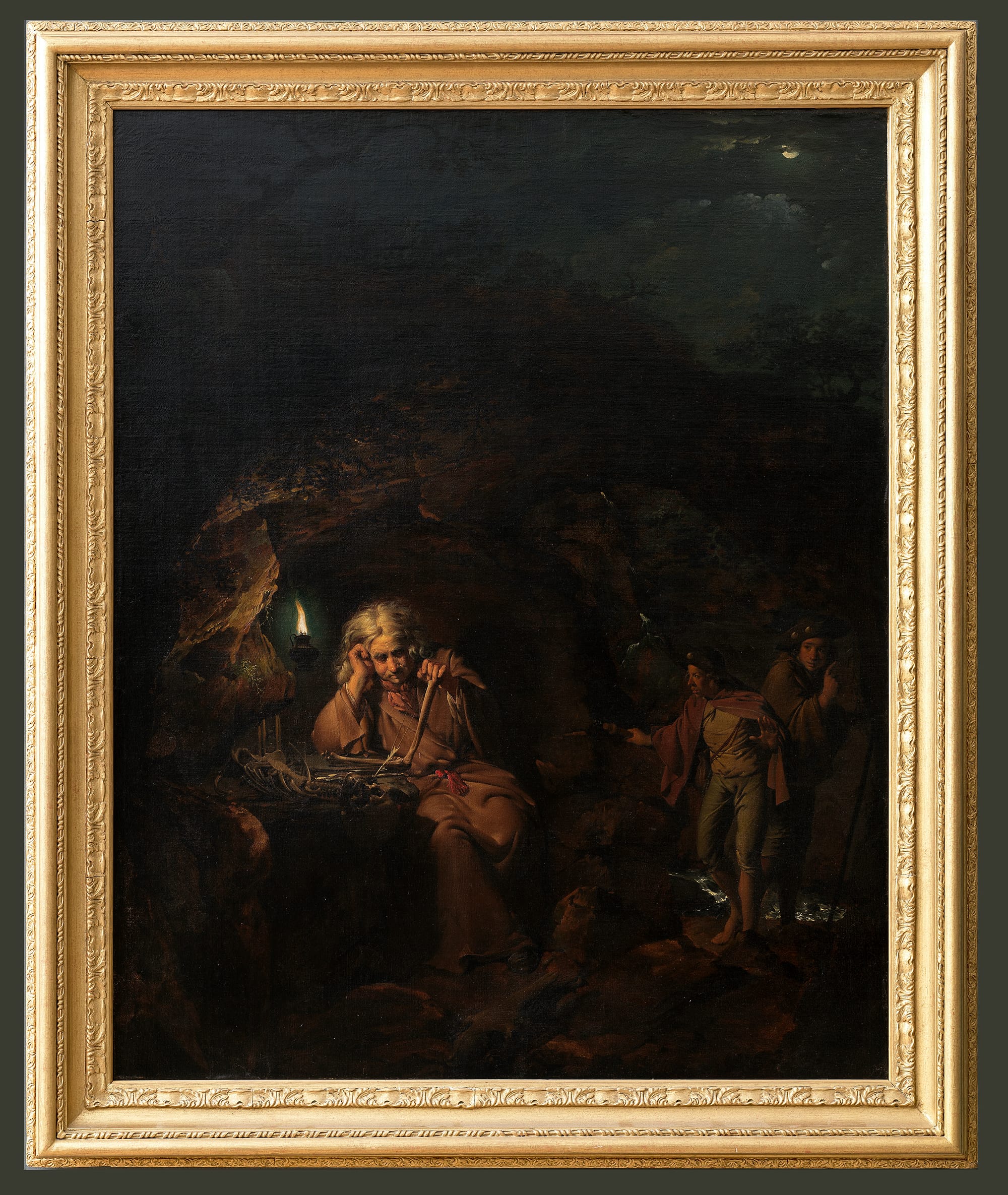
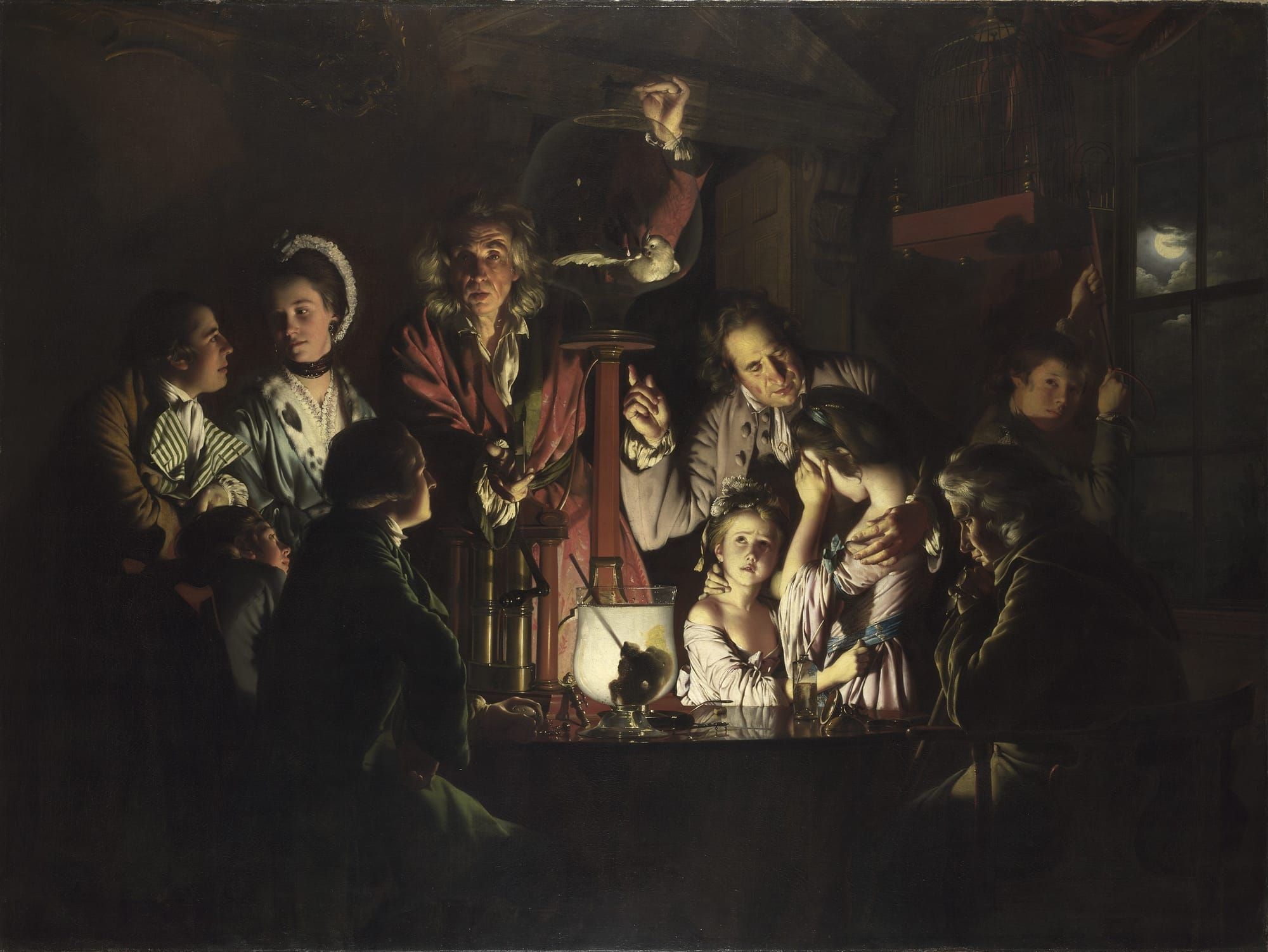
For the exhibition Wright of Derby: From the Shadows at the National Gallery, curators Christine Riding and Jon King have chosen to focus on his tenebrism an extreme form of chiaroscuro, literally meaning “darkened” in Italian to draw attention to his artistic achievements more than his subject matter. By applying tenebrism to depictions of scientific experiments such as “An Experiment on a Bird in the Air Pump” (1768), which demonstrates the effect of a vacuum, or “The Alchymist in Search of the Philosopher’s Stone” (exhibited 1771, reworked and dated 1795), recording the accidental discovery of phosphorous, Wright portrays the dramatic moment of intellectual or moral revelation for they were considered entwined at the time as the single, intense light source lends both intensity and intimacy. The curators put it simply: “[Wright] treated science lectures with a grandeur and drama usually reserved for history or myth.”
Accompanying “Air Pump,” the show’s anchoring work, are further candlelit scenes mined heavily from Derby museums, plus a few extraordinary private loans and well-selected pieces from London collections like the Victoria & Albert Museum. From the Shadows is small but its curation is tight and lean, with consistent laser focus on painterly technicality. We learn, for example, that Wright used bright white lead paint to prime his canvases in order to emphasize the reflective brilliance of the depicted light source and applied a darker layer (known as “dead-coloring”) everywhere else to heighten the contrast. A contemporaneous quote referenced in the caption for “The Alchymist” draws attention to his close study of Dutch compositional precedents to inform his own, asking, “Who of all the Flemish and Dutch schools can equal Wright in still life?”
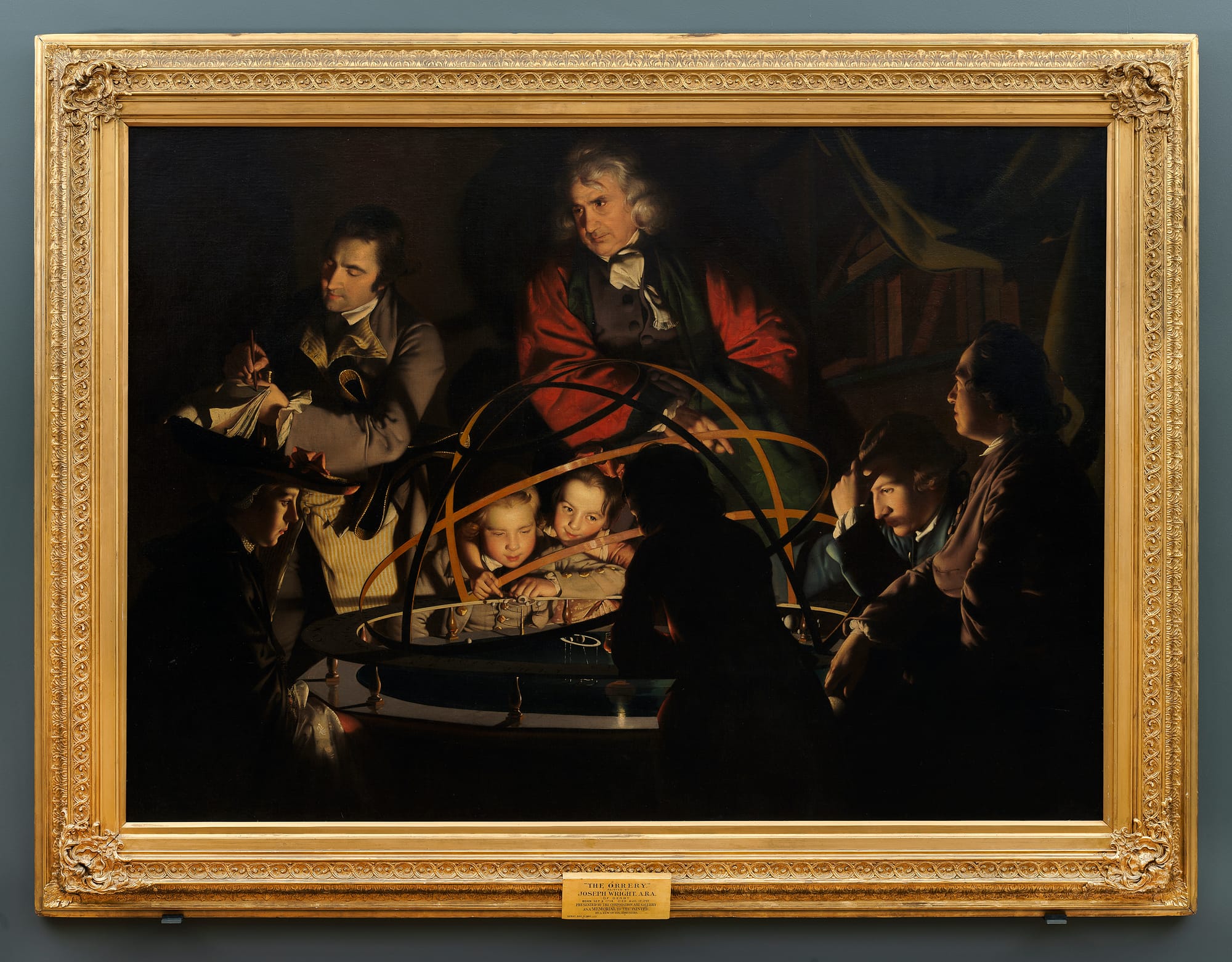
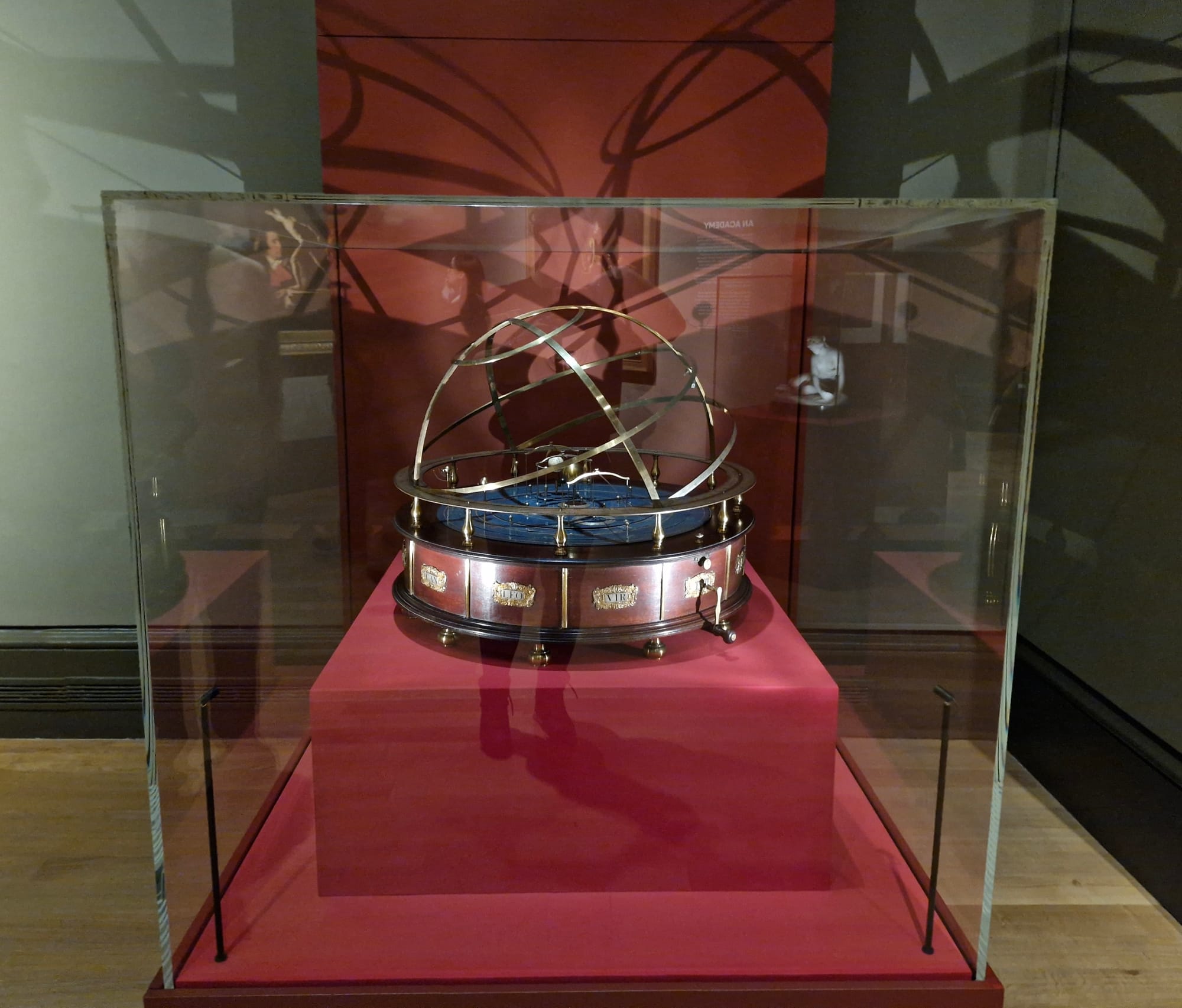
Alongside “Air Pump” is the actual object circa 1774–93, loaned from Whipple Museum of the History of Science in Cambridge, while “A Philosopher giving That Lecture on the Orrery in Which a Lamp Is Put in the Place of the Sun” (exhibited 1766) is paired with an actual orrery of 1750, loaned from Dumfries House. In an inspired bit of exhibition design, the latter has been lit from below to cast shadows of its interlocking rings across the wall behind, echoing the light and dark interplay of the paintings it is supporting.
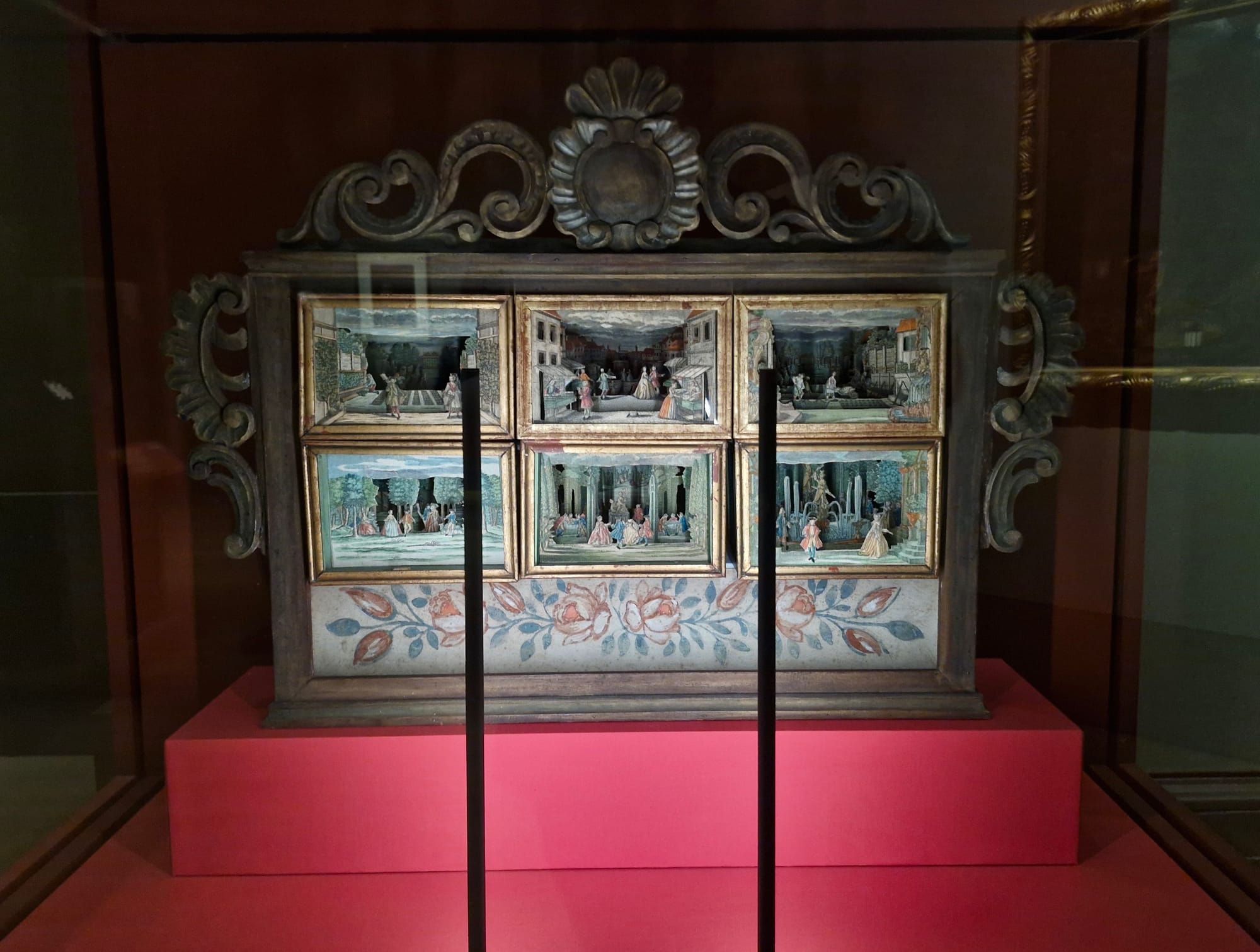
Even more clever is the decision to include a V&A-loaned toy peepshow likely from 1721. A wall text explains that the peepshow recreated life on a miniature theatrical stage. From the outside, looking in, we see how each room is a tiny container for light, evoking “worlds that seem to recede into the distance.” Riding and King state that Wright’s niece recalled him setting up his studio as two rooms one in darkness with items arranged around a candle, the other well lit, so he could observe the differences in shadow — treating the rooms as containers of light. To underscore the comparison, they note, “In this unusual way of working, he made his studio akin to a scaled-up peepshow.” Including the toy itself to demonstrate both the theatrical quality of looking at Wright’s paintings and his idiosyncratic way of constructing them is rather ingenious.
Mezzotints based on 11 of his paintings are arranged tableaux-style, offering a means to see all of Wright’s artworks at once, and to illustrate tenebrism’s effectiveness in this medium importantly, a transportable and duplicable format that could spread his fame. A single reproduction of a typically grotesque and satirical James Gillray cartoon, included to make a separate point emphasizing an increased awareness of the act of looking and seeing at the time, brings us back to a wider art historical context. Wright’s depictions are the tonal and emotive opposite of Hogarth’s satire, which defined art trends of the moment; Wright expresses an optimism and wonderment in tandem with scientific and intellectual exploration in short, he has heart.
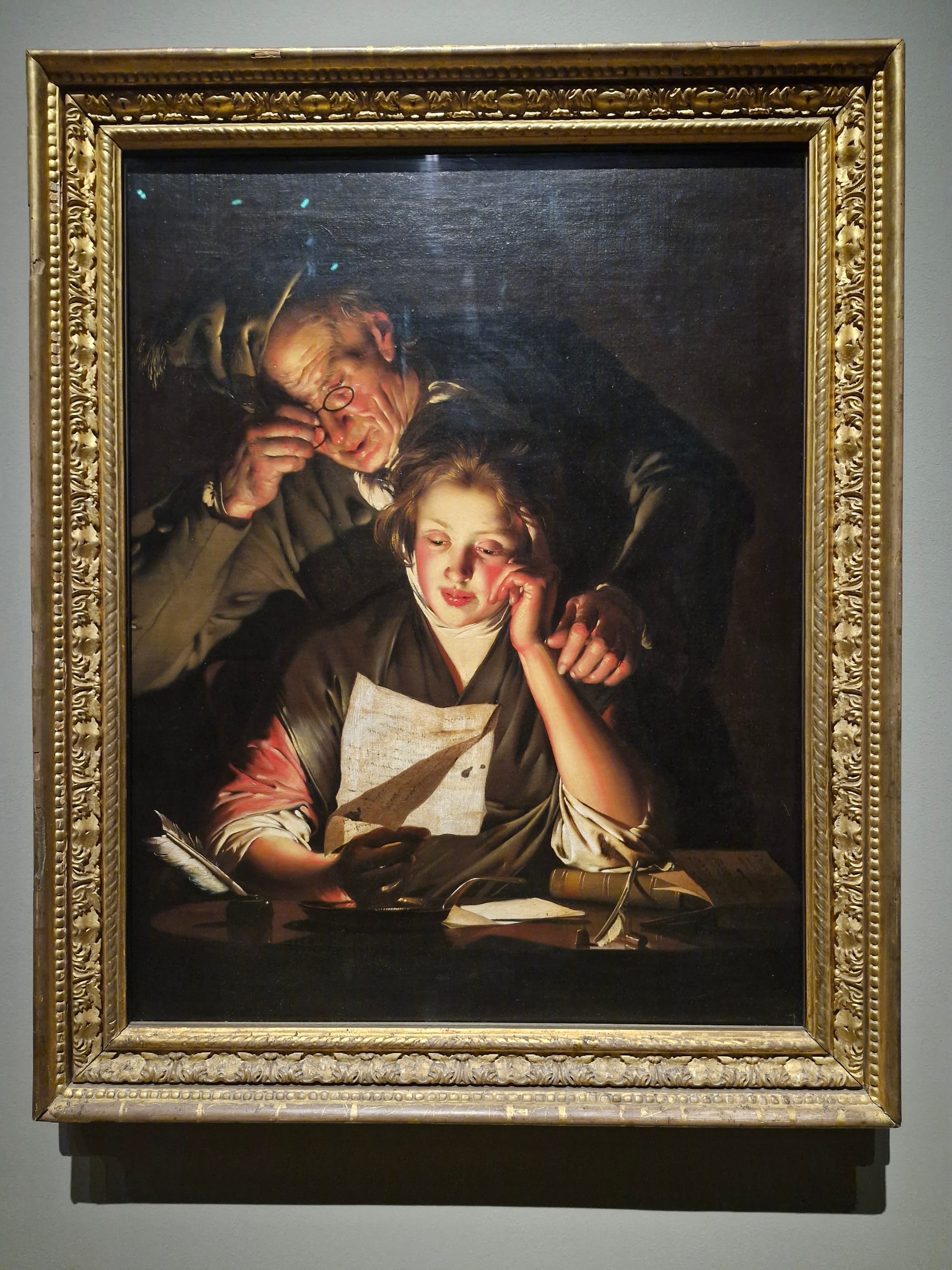
The unusually large scale of his pieces bespeaks a grandness a sense of great event happenings. Even his genre pieces, such as the aforementioned private loans (“A Girl Reading a Letter with an Old Man Reading Over her Shoulder” and “Two Boys Fighting Over a Bladder,” both c. 1767–70) are twice the size you might expect for the subject matter. Further information regarding to the paintings’ end-goal and purpose would have added another level of insight to the show, clarifying the origin of their creation. It may be the missing puzzle piece explaining Wright’s relative obscurity despite his distinguishing qualities, while Hogarth endured more steadfastly. He may be an overlooked rural curio, yet the warmth, charm, and spectacle of his work delight. Wright is the local boy done epic.