

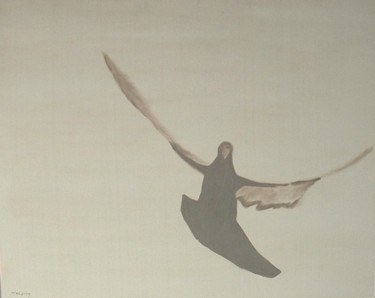
In contemporary art, simplicity often carries the greatest emotional weight. Rather than overwhelming viewers with complexity, some artists choose to communicate through subtle textures, restrained compositions, and carefully balanced forms. Among those embracing this thoughtful approach is Pras, a painter whose work explores the quiet relationship between material, emotion, and visual harmony through oil and acrylic painting.
Pras has developed an artistic practice centered on the expressive possibilities of paint itself. Working primarily with oil and acrylic on canvas, he creates compositions that emphasize texture, atmosphere, and the physical qualities of the medium. His paintings are not driven by elaborate narratives or literal representation. Instead, they encourage slow observation, inviting viewers to discover meaning through the interaction of color, surface, and form.
One of the defining characteristics of Pras’s work is his careful use of texture. Rather than treating the painted surface as a simple background, he allows the material itself to become an active part of the composition. Layers of paint, subtle variations in thickness, and delicate brushwork create tactile surfaces that respond to changing light and reward close viewing. These textures add depth and richness, transforming each canvas into more than just an image—they become objects of contemplation.
Oil and acrylic each offer distinct creative possibilities, and Pras makes thoughtful use of both. The richness and blending qualities of oil paint allow him to produce smooth transitions and luminous surfaces, while acrylic provides flexibility, precision, and the ability to build expressive layers. By combining these traditional techniques with a contemporary artistic vision, he achieves a balance between technical craftsmanship and personal expression.
His paintings are often defined by minimal compositions that avoid unnecessary visual distraction. Rather than filling every area of the canvas with detail, Pras carefully considers the relationship between occupied and empty space. This measured use of negative space gives his work a sense of calm and balance, allowing each shape, texture, and color to breathe naturally within the composition.
Although his work occasionally includes representations of animals, these subjects rarely appear as straightforward illustrations. Instead, they emerge through a subtle process of abstraction that shifts attention away from literal depiction and toward emotional presence. Animals become symbolic forms that encourage reflection rather than explanation, inviting viewers to interpret their significance according to personal experience and imagination.
This balance between recognizable imagery and abstraction is one of the most engaging aspects of Pras’s artistic language. By simplifying forms without completely removing their identity, he creates paintings that exist between reality and imagination. Viewers may recognize familiar subjects while simultaneously experiencing them in unexpected and deeply personal ways.
Color also plays a central role in shaping the atmosphere of his work. Rather than relying on dramatic contrasts or highly saturated palettes, Pras often favors soft, carefully moderated tones that contribute to a meditative visual experience. Gentle transitions between colors create harmony across the canvas, allowing emotion to emerge gradually instead of demanding immediate attention. This restrained approach gives his paintings a timeless quality that encourages repeated viewing.
The fluidity of form further enhances this sense of tranquility. Shapes appear to move naturally across the canvas, connected by subtle rhythms and balanced compositions. Instead of rigid outlines or sharply defined structures, Pras allows forms to evolve organically, reinforcing the quiet elegance that characterizes his work. This visual flow creates an atmosphere that feels both peaceful and emotionally engaging.
Beyond their aesthetic qualities, Pras’s paintings invite contemplation. They ask viewers to slow down and engage with the artwork beyond first impressions. In a world increasingly dominated by constant visual stimulation, his paintings offer an opportunity for stillness and reflection. Every texture, brushstroke, and subtle variation in tone contributes to an experience that unfolds gradually, rewarding patience and careful observation.
His artistic practice demonstrates a deep respect for traditional painting techniques while embracing the openness of contemporary art. Oil and acrylic remain central to his process, yet he uses these familiar materials to explore modern ideas about perception, emotion, and visual simplicity. Rather than relying on complexity for impact, he shows how carefully considered restraint can create equally powerful artistic experiences.
Pras’s commitment to balance is evident throughout his body of work. Whether arranging forms across the canvas, selecting a harmonious color palette, or developing textured surfaces, he consistently seeks equilibrium between structure and spontaneity. This thoughtful approach results in paintings that feel composed yet natural, refined yet expressive.
Another strength of his work lies in its emotional accessibility. Without prescribing a single interpretation, Pras allows each viewer to build a personal relationship with the painting. Some may find a sense of peace within the quiet compositions, while others may discover memories, emotions, or symbolic meanings that resonate with their own experiences. This openness is one of the defining qualities of successful contemporary abstraction, encouraging dialogue rather than certainty.
As contemporary art continues to embrace experimentation and diverse forms of expression, Pras demonstrates that innovation does not always require dramatic gestures or complex imagery. His work illustrates how subtle shifts in texture, color, and composition can communicate profound emotional depth. Through careful craftsmanship and thoughtful artistic choices, he transforms ordinary materials into paintings that encourage reflection and quiet engagement.
Today, Pras continues to refine his distinctive visual language, exploring the possibilities of oil and acrylic while remaining committed to an aesthetic rooted in simplicity, balance, and emotional resonance. His paintings stand as reminders that contemporary art can be both understated and deeply meaningful, offering viewers a space where form, texture, and atmosphere come together in harmony. Through his evolving practice, Pras contributes a thoughtful and contemplative voice to the world of contemporary painting, demonstrating the enduring power of restraint, sensitivity, and artistic authenticity.
