

His film Assembly is more than just documentation of a performance. It’s a kind of communion.
Rashaad Newsome’s Assembly is technically a documentary about a performance. But calling it that feels small. Yes, it documents his installation at the Park Avenue Armory, but what it offers is a vision, a map, a speculative ritual for survival.
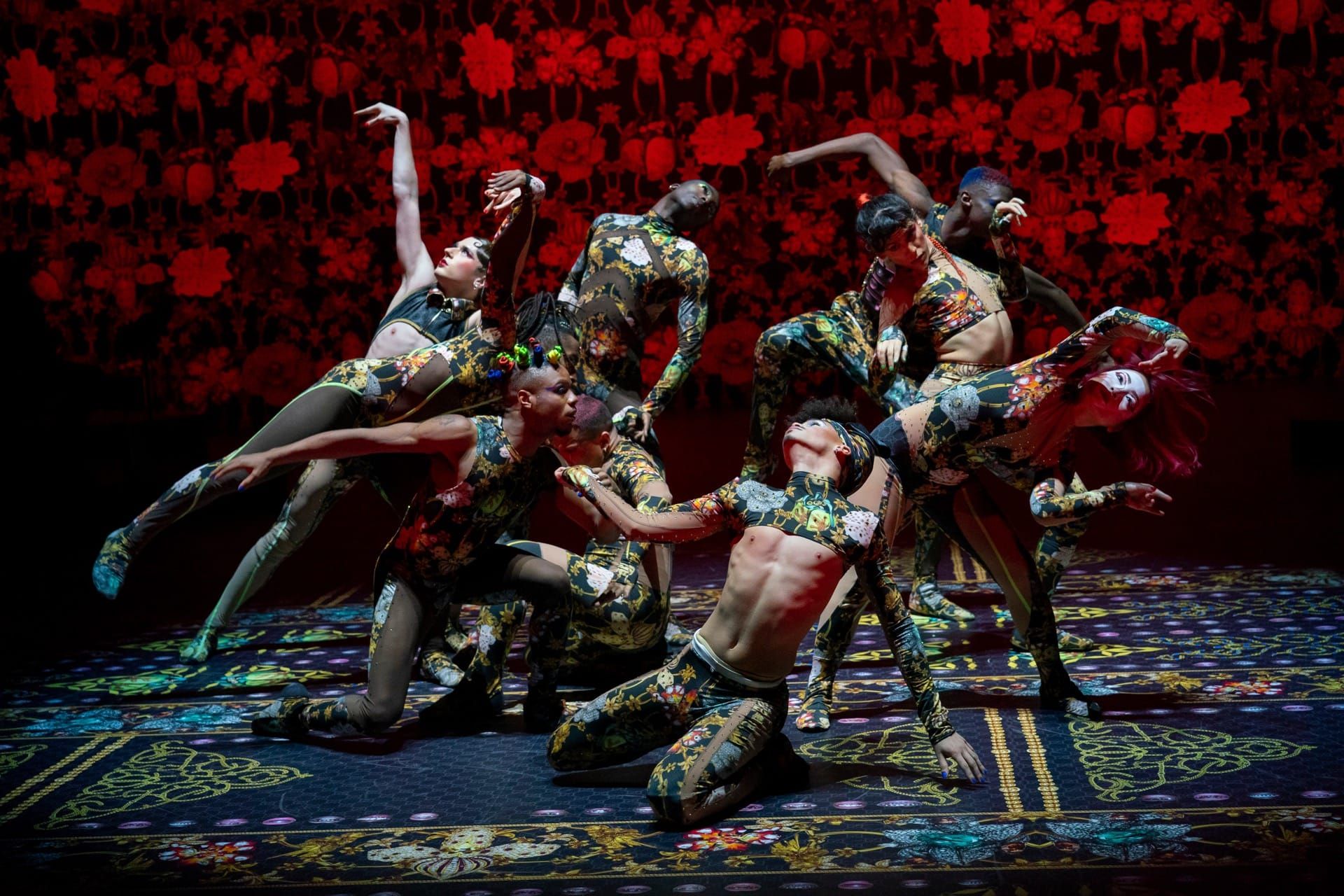
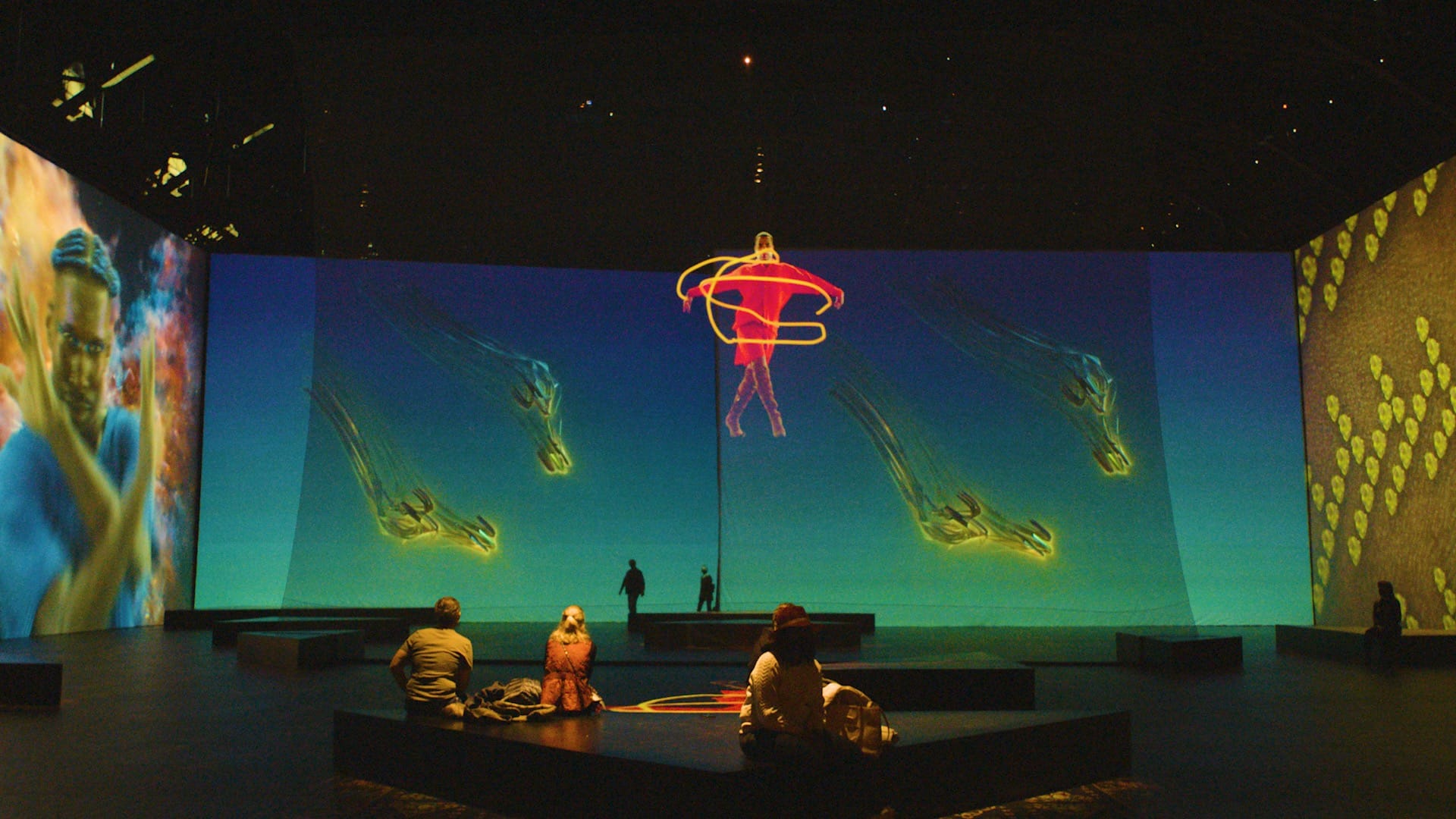
At its core, Assembly documents Rashaad Newsome’s multi sensory performance at the Park Avenue Armory, staged in March 2022. The piece blended live performance, digital projection, and participatory workshops to explore themes of decolonization, healing, and Black queer futurity. Dancers performed choreography by Maleek Washington beneath towering video projections, while a virtual AI entity named “Being” guided both performers and audience members through meditations and critical prompts. Structured across multiple chapters, the performance wove together ballroom, poetry, breathwork, and speculative technology into a ritualized experience designed not only to be witnessed but also to be felt, challenged, and metabolized. The film follows this unfolding while expanding its reach, offering intimate moments from behind the scenes and reflections from collaborators that push the work even further.
Newsome is front and center, but the spotlight is shared with the performers, collaborators, and the community that surrounds the work. The film makes space for the performers, giving them room to reflect, to speak in their own cadence. It’s not just his story it’s theirs too. That collaborative framing reminded me of Jennie Livingston’s 1991 film Paris Is Burning. But while Livingston always felt like an outsider looking in, Assembly moves differently. Newsome isn’t reporting on a culture he’s participating in, building, and preserving it.
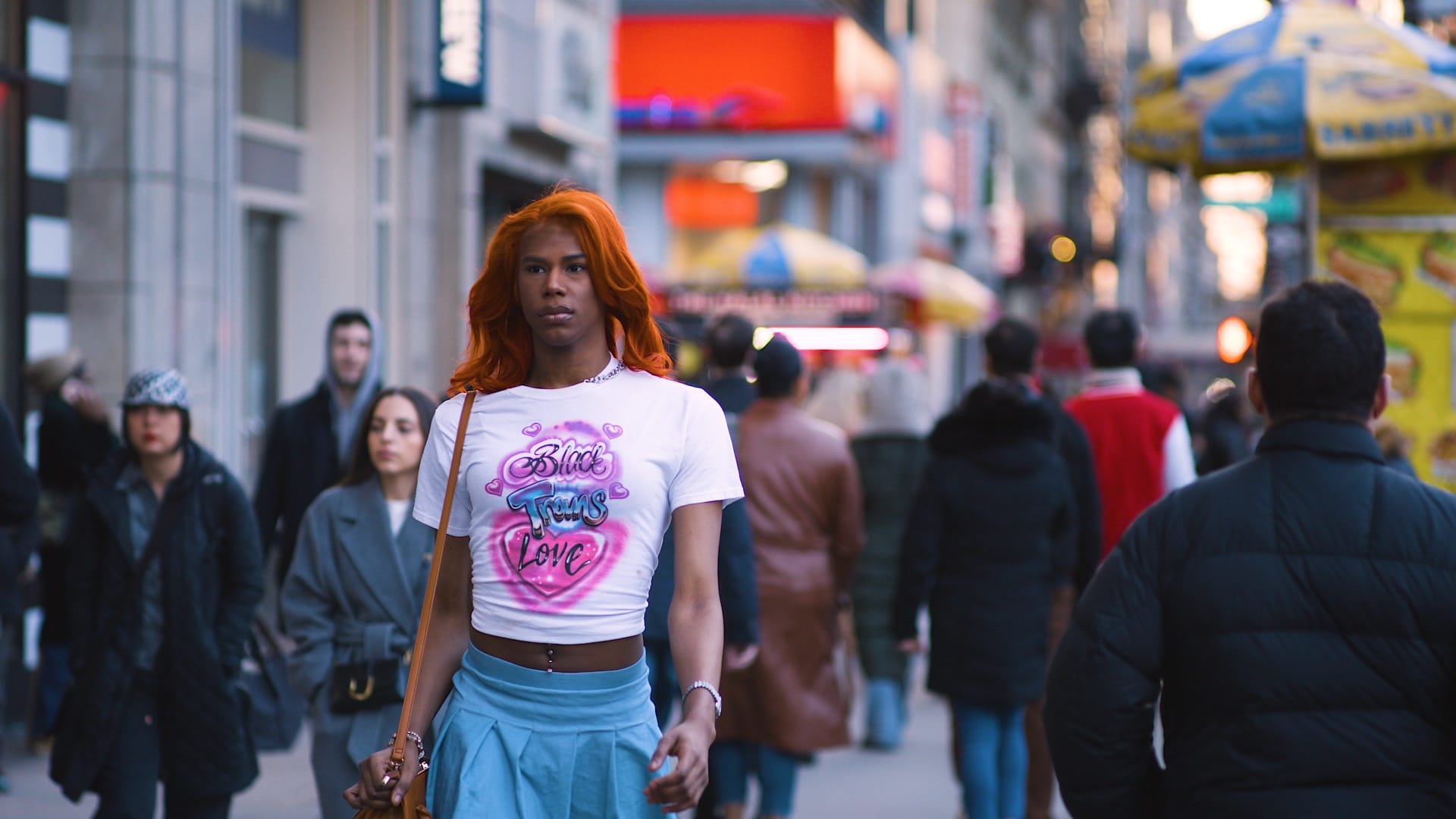
I’ve been following his work since around 2006. The first piece I saw was just a photo of him smiling. That alone felt like a radical act: a gay Black man from Louisiana, joyful, present, not performing trauma. Assembly feels like an extension of that. Joy isn’t contrast, but rather the point.
Visually, the film is stunning. Cinematographer Johnny Symons knows when to lean in and when to pull back. Even the more candid moments feel intentional, as if everyone involved knows this is more than just documentation. It’s a kind of communion.
Then there’s the AI character part CITA’s World, (the late 90s/early 2000s BET show featuring a virtual Black host), part Deep Space Nine, part digital griot. It appears as punctuation, not plot. I didn’t always connect with it emotionally, but it helped clarify something: Assembly isn’t just about capturing a work. It is the work. The AI reminds us we’re somewhere else entirely somewhere speculative, ritualistic, alive.
There’s a scene that lingers. During a decolonization workshop, where audience members could engage directly with the AI, a masked participant approaches the mic and questions the project. It was during the COVID-19 pandemic, so wearing a mask isn’t unusual. But the tone? That was familiar. Sharp. Entitled. She begins by thanking the audience and invoking critiques of “capitalist white supremacist patriarchy” a phrase drawn directly from bell hooks, particularly in Ain’t I a Woman but quickly pivots to denouncing the AI itself. “All of the knowledge it has comes from people,” she says. “We can share these things with each other … in spaces that aren’t influenced by technology.” Then, bluntly: “Fuck this AI.” The delivery felt less like engagement and more like a takedown.
It’s part of a larger pattern: White women confronting Black queer artists in spaces they don’t control, only to reassert themselves in the exchange. From the way Paris Is Burning has been scrutinized through a White lens to moments I’ve witnessed firsthand, engagement that quickly turns into moral policing a script that plays out far too often. And I’ve seen this kind of energy before. I remember a talk Newsome gave at New York University on his long running performance Shade Compositions, where a critique of his use of Black women’s voices and bodies felt more accusatory than curious, flattening, even. As if a queer Black man couldn’t express reverence without being accused of harm. There’s something worth examining in that reflex, especially in relation to a film so rooted in care, intentionality, and authorship. Because what Assembly offers dignity, complexity, reverence is so often withheld from queer Black men in the real world, even in the spaces we carve out for ourselves.
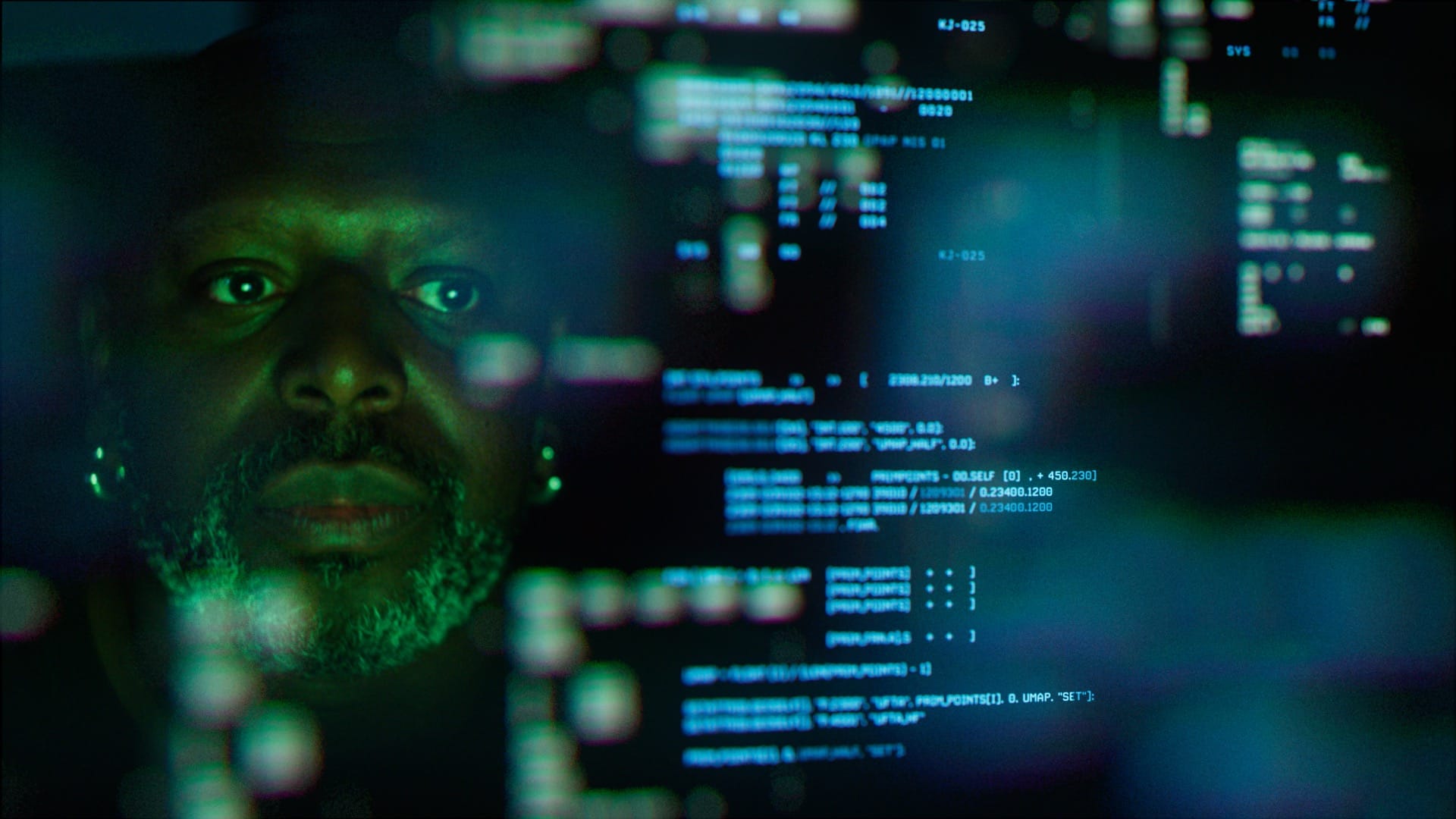
And what often gets lost in moments like that is everything Assembly is working toward. The fears surrounding AI are real, and often rooted in legitimate concerns about labor, surveillance, and exploitation. But in this context, it’s worth asking: Who is using the technology, and to what end? Newsome’s work doesn’t ignore those concerns it reframes them. It’s part of a longer, often overlooked lineage of Black innovation, where technology becomes a tool for survival, imagination, and resistance. I kept thinking about Kerby Jean-Raymond’s 2021 Pyer Moss couture show at Madam C.J. Walker’s estate. It honored Black inventors those behind the traffic light, the Super Soaker, and more but its ambitious scale, celebratory tone, and centering of Black ingenuity unsettled some critics who seemed more comfortable with fashion as commentary than confrontation. That discomfort felt familiar. Like Assembly, the show wasn’t pandering to a dominant gaze. It reclaimed futurity on its own terms. Newsome’s use of AI, projection, and digital ritual isn’t some utopian gimmick, but rather a legacy. It’s not about escaping the present; it’s about reprogramming it.
And still, the film doesn’t try to explain itself. It’s not interested in catering to viewers who expect to be taught. If you’re outside the community it’s speaking to, the burden is on you to listen. That doesn’t mean the film is inaccessible. It leaves the door open but instead of flattening its subjects to do so, it lets them stay whole, tender, sharp, complicated. That kind of generosity is rare, and it’s part of what makes Assembly hit so hard.
I’ll be honest: I wasn’t sure how I felt at first. The first half of the film involves its heaviest use of technology, and I worried it might get stuck there. But it doesn’t. It blooms. Slowly. It’s like a Southern dish: it’s good the first day, but even better after it’s had time to sit. I cried more than once. Because what we’re witnessing isn’t just performance it’s presence. And not just one kind of Blackness, one type of queerness, one kind of futurity. It’s a whole spectrum, making room for itself.
There’s a quote from Erica Alexander that kept echoing in my head while I watched: “The past is painful, the present is precarious, but the future is free.” That’s precisely what this film holds. And not in some naïve, techno utopian sense. The freedom here is earned. It’s grounded in code, choreography, and care. It reminds us that Blackness and technology have always been entangled and that the future isn’t something we’re waiting for. It’s already being built.
