

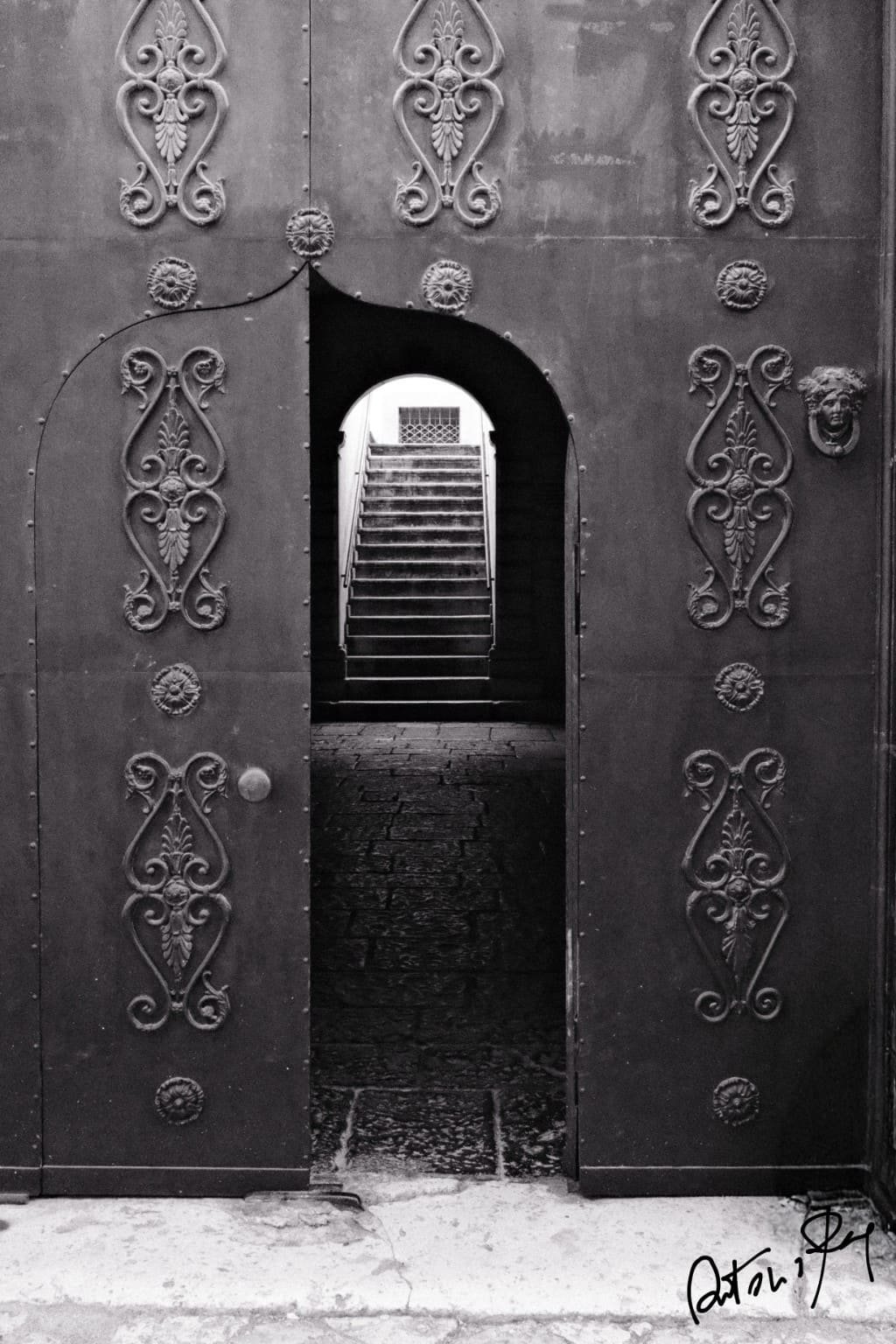
Before it becomes anything else before composition, before technique, before a finished print photography, for Antonio Rana, begins as an act of looking. Long before he owned the vocabulary of the medium, he was already doing the thing photographers do: pausing at a threshold, tracking a shadow across a wall, waiting for a passerby to complete a scene that was otherwise empty. That instinct for observation, more than any formal training, is the foundation his practice was built on, and it remains the clearest throughline in his work today.
Choosing the Discipline of Black and White
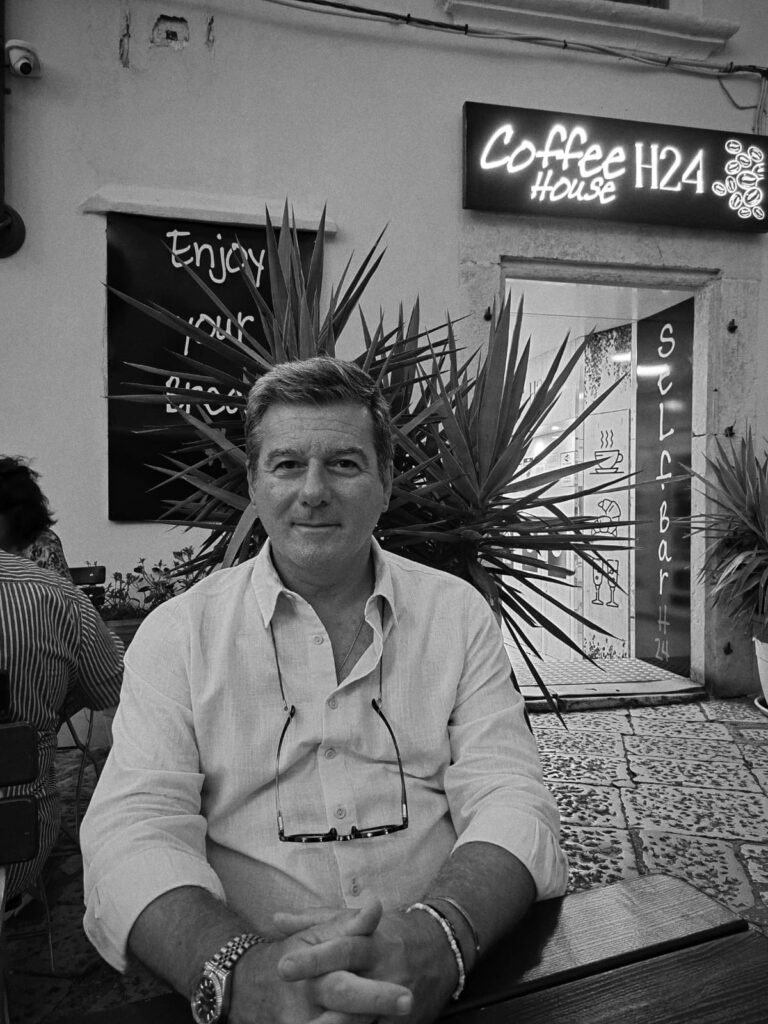
Rana’s photographs are almost exclusively black and white, and that choice is worth pausing on, because it is not a default but a discipline. Working without color removes an entire category of information from the frame no warm terracotta, no blue shutters, no green shade and replaces it with a stricter set of questions: where does the light fall, and where does it not. Tone, contrast, and form have to do all the work that color would otherwise handle, which means every photograph has to earn its impact through structure rather than palette. For a self-taught photographer working out his own rules, that constraint doubles as a teacher.
Light as a Narrative Device
In Rana’s images, light rarely functions as mere illumination. It behaves more like a narrative device, singling out a staircase, a face, a stretch of pavement, while allowing the rest of the frame to recede. This is a photography that trusts light to make editorial decisions to say, in effect, look here, and not there. The photographs move through streets, facades, and passageways as if light itself were choosing the subject, and Rana’s role is closer to that of a careful witness than a director imposing an idea from outside.
Shadow as a Tool of Interpretation
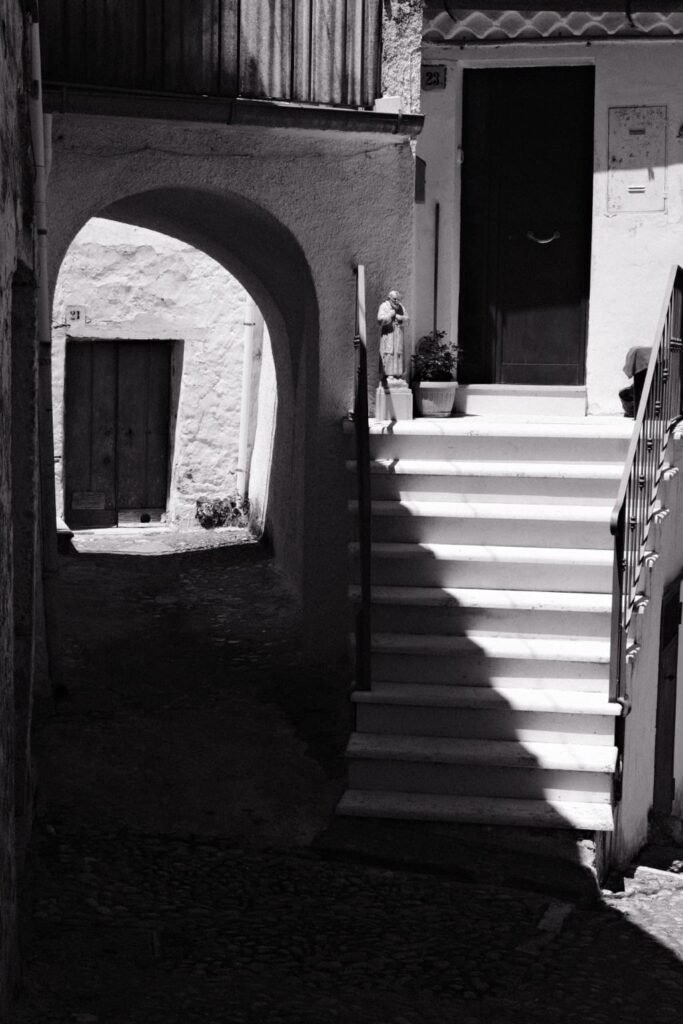
If light selects, shadow interprets. Across Rana’s black-and-white work, shadow is used not as a byproduct of exposure but as an active compositional element, a way of suggesting what cannot be fully seen, of introducing ambiguity into an otherwise documentary frame. This is where his images depart from straightforward reportage and edge toward something more interpretive: the street is real, the building is real, but the way shadow obscures part of it is a decision, and that decision changes how the photograph is read.
From First Steps to a Finished Body of Work
Rana’s practice took shape quickly. He began photographing in 2025, entirely self-taught, roughly eight months before this piece was written, and moved without much delay from casual observation to sustained research into light, shadow, and composition. That research found its first major expression in a monograph of ninety black-and-white photographs, a substantial undertaking for a photographer so early in his development, and one that functioned less as a greatest-hits compilation than as a testing ground. Assembling ninety images around a single visual philosophy required consistency, and it is in the completion of that project that a more defined identity in his work becomes visible.
The Theatrical Composition: A Working Method
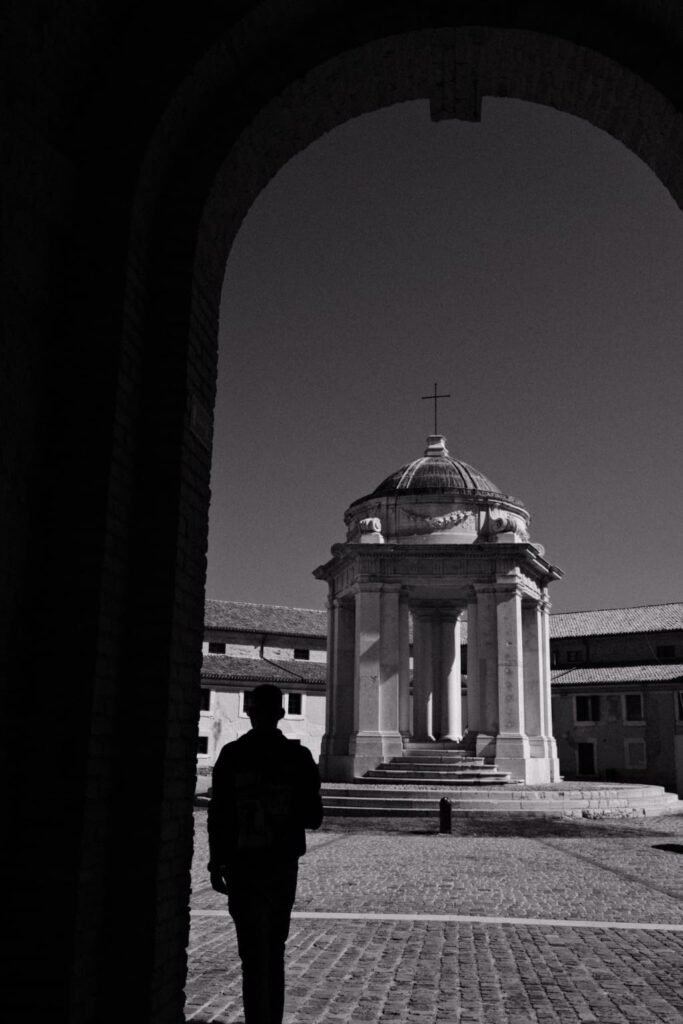
The clearest articulation of that identity is what can be called the theatrical composition, a concept that took hold in Rana’s photography after the monograph and has continued to develop through his subsequent projects. The idea treats the photographic frame as something close to a stage: light acts as a spotlight, selecting what deserves attention, while shadow performs the function of a curtain, holding back everything else. Depth, mystery, and anticipation are generated by what remains unlit; architecture, thresholds, and human figures step forward wherever the light lands, becoming, in effect, performers within a scene neither built nor staged by the photographer.
This distinction matters. Rana is not constructing artificial tableaux; he is identifying theatrical structure that is already present in real streets and real buildings, and composing his frame to make that structure legible. A door left ajar, an archway, a flight of worn steps: these become entry points for figures and light alike, elements that appear to walk into a composition that was, in fact, simply observed and recognized at the right moment. The underlying logic can be summarized simply: neither light nor shadow cancels the other out; the story is told by the contrast between them, and that contrast is the closest thing this body of work has to a signature.
Gargano as a Laboratory
The theatrical composition did not stay confined to studio thinking or isolated frames it became the operating method behind Rana’s subsequent work in Gargano, Italy, where he has produced reportages and audiovisual projects centered on the region’s villages and their architectural, human, and landscape character. Gargano functions almost as a laboratory for the ideas developed through the monograph: its narrow streets and stone architecture generate exactly the kind of graphic contrast between illuminated and shadowed surfaces that Rana’s method depends on, while its inhabitants provide the human presence that keeps the work from drifting into pure architectural study.
Visual Journey – The Gargano Through Light
This convergence of place and method is most fully realized in Visual Journey – The Gargano Through Light, a project that draws together Rana’s photographic and audiovisual research into a single synthesis. The villages photographed here are not presented as scenic backdrops; they are treated as active components of a visual narrative, in which architecture and human presence, stillness and movement, observation and composition are held in constant relation to one another. A stairway is not only a stairway it is also a compositional device, a passage of light, a location where memory and place intersect. The project asks its viewer to hold documentation and interpretation together, rather than choosing between them.
What the Photographs Ask of Their Viewer
Ultimately, what Rana’s photographs ask is not to be read as evidence of a place but as an interpretation of it, one built from the same raw material any visitor to Gargano would encounter, but organized according to a particular sensitivity to how light divides a scene into what is shown and what is withheld. Documentation supplies the subject; perception supplies the shape. In under a year, working without formal instruction, Rana has arrived at a method that treats reality itself as already composed, waiting only to be seen with enough patience to notice where the light has chosen to fall.
Discover more of Antonio Rana’s photography on Instagram: @anto19682
