

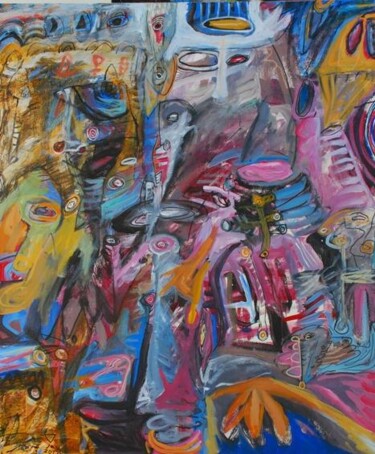
Art has long served as a bridge between tradition and the present, preserving cultural memory while allowing each generation to reinterpret its meaning. For I Ketut Jaya, widely known as Kaprus, painting is a powerful way to honor the spiritual traditions of Bali while expressing them through a contemporary artistic language. Drawing inspiration from the island’s rich cultural heritage, his work explores the symbolism of Hindu ceremonies, sacred rituals, mythology, and traditional customs, creating paintings that celebrate both history and living tradition.
As a contemporary Indonesian painter, Kaprus has developed a distinctive artistic identity rooted in the spiritual life of Bali. The island is renowned for its vibrant ceremonial culture, where religious practices, artistic expression, and daily life exist in close harmony. Rather than treating these traditions as historical subjects, Kaprus presents them as dynamic and enduring sources of inspiration that continue to shape modern Balinese identity.
His paintings are deeply influenced by the visual symbols found throughout Balinese Hindu ceremonies. Ritual objects, ceremonial offerings, sacred ornaments, traditional attire, and elements of temple life frequently inspire his compositions. These familiar cultural references become more than decorative motifs; they are transformed into symbolic forms that carry spiritual, historical, and emotional significance.
For Kaprus, symbolism is not simply a visual device but an essential language through which cultural knowledge is communicated. Every ceremonial object and every mythological reference has meaning that extends beyond its physical appearance. By incorporating these elements into his paintings, he preserves aspects of Balinese tradition while inviting contemporary audiences to appreciate their deeper cultural value.
Balinese mythology also plays a significant role in shaping his artistic vision. Stories passed down through generations provide rich narratives filled with symbolic characters, spiritual lessons, and philosophical ideas. Rather than illustrating these myths literally, Kaprus often interprets them through a contemporary lens, allowing ancient traditions to remain relevant within today’s artistic landscape. His work demonstrates how mythology continues to inspire creativity while connecting the past with the present.
One of the defining qualities of Kaprus’s painting is the balance between conscious artistic intention and intuitive expression. His creative process draws not only from visible cultural traditions but also from the subconscious influence of memories, beliefs, and lifelong experiences within Balinese society. This combination of thoughtful observation and instinctive creativity gives his paintings remarkable emotional depth while maintaining a strong connection to their cultural origins.
The visual richness of his work reflects the complexity of Balinese ceremonial life. Layers of symbolism, carefully considered compositions, and expressive forms create paintings that encourage viewers to look beyond the surface. Each artwork rewards careful observation, revealing details that may carry religious, historical, or philosophical significance. This depth allows his paintings to function as both aesthetic experiences and cultural reflections.
Although firmly grounded in tradition, Kaprus approaches painting with a contemporary perspective. Rather than reproducing ceremonial scenes exactly as they appear, he reinterprets familiar symbols through his own artistic vision. This creative freedom enables him to preserve cultural heritage while allowing it to evolve naturally within modern artistic practice. His paintings become spaces where tradition and innovation exist together without contradiction.
Color and composition play important roles in communicating the emotional atmosphere of his work. Rich tones, balanced arrangements, and expressive forms contribute to paintings that evoke both reverence and vitality. The visual energy found in Balinese ceremonies is reflected in his compositions, where symbolic elements interact harmoniously to create works filled with movement and meaning.
At the heart of Kaprus’s artistic practice lies a deep respect for Balinese culture and spirituality. His paintings are not simply representations of ceremonial life but expressions of personal connection to the traditions that have shaped his identity. This authenticity gives his work a sincerity that resonates with audiences both within Indonesia and internationally.
His dedication to preserving cultural heritage through contemporary art has earned recognition beyond his home country. One of the most significant acknowledgments of his career is the inclusion of his work in the collection of the Museum für Völkerkunde in Austria. Having his paintings represented in an international museum highlights the universal value of his artistic vision while introducing Balinese cultural traditions to audiences around the world.
This international recognition reflects the growing appreciation for artists who successfully combine local heritage with contemporary expression. Kaprus demonstrates that deeply rooted cultural traditions can speak across geographical and cultural boundaries when presented through thoughtful and compelling visual language. His work allows viewers unfamiliar with Balinese customs to experience their beauty and symbolism while encouraging greater understanding of Indonesia’s rich artistic heritage.
Beyond preserving tradition, Kaprus’s paintings also encourage reflection on the role of culture in modern life. In a rapidly changing world, his work reminds viewers of the importance of maintaining meaningful connections to history, spirituality, and community. Through visual storytelling, he illustrates how ancient rituals and symbolic traditions continue to provide inspiration and relevance in contemporary society.
His artistic journey reflects the broader evolution of contemporary Indonesian art, where many artists seek innovative ways to engage with cultural identity without abandoning their roots. Kaprus achieves this balance by honoring traditional Balinese symbolism while embracing the creative freedom of contemporary painting. This combination gives his work both historical significance and modern relevance.
As audiences increasingly seek authentic cultural perspectives within contemporary art, Kaprus’s paintings offer meaningful insights into the spiritual richness of Bali. Rather than presenting culture as something static or distant, he reveals it as a living source of creativity that continues to inspire new artistic possibilities. His work demonstrates that tradition remains a powerful foundation for innovation when approached with respect, curiosity, and imagination.
Today, I Ketut Jaya (Kaprus) continues to celebrate the enduring beauty of Balinese culture through paintings that unite symbolism, spirituality, and contemporary artistic expression. His work stands as a tribute to the island’s ceremonial heritage while contributing to the global conversation surrounding cultural identity in modern art. Through every canvas, Kaprus preserves the stories, rituals, and philosophies of Bali, ensuring that they continue to inspire future generations while reaching audiences far beyond Indonesia’s shores.
